
Your phone was at 38%, then suddenly it dropped to 12%. Or it says it is charging, but the battery barely moves. If you are wondering when to replace phone battery issues instead of putting up with them, the answer usually shows up in your day-to-day use long before the battery fails completely.
A weak battery does more than run out faster. It can slow performance, cause random shutdowns, create charging problems, and make a reliable phone feel old before its time. For people who depend on their device for work, school, banking, maps, and family communication, waiting too long often turns a simple repair into a bigger inconvenience.
When to replace phone battery: the clearest signs
The most obvious sign is fast battery drain. If your phone used to last most of the day and now struggles for a few hours under the same habits, the battery is wearing out. All batteries lose capacity over time, but the drop should be gradual. When it starts feeling sudden or severe, replacement becomes worth considering.
Unexpected shutdowns are another major warning. If your phone powers off at 20%, 30%, or even higher, that usually means the battery can no longer deliver stable power. This is common in older iPhones, but it also affects Samsung, Huawei, Xiaomi, OnePlus, Oppo, and other brands. A phone that dies with charge still showing on screen is not just annoying – it is unreliable.
Slow charging or inconsistent charging can also point to battery trouble, although this one needs a little care. Sometimes the issue is the cable, adapter, charging port, or software. But if you have already tried a good charger and the phone still charges unusually slowly, heats up, or stops and starts during charging, the battery may be part of the problem.
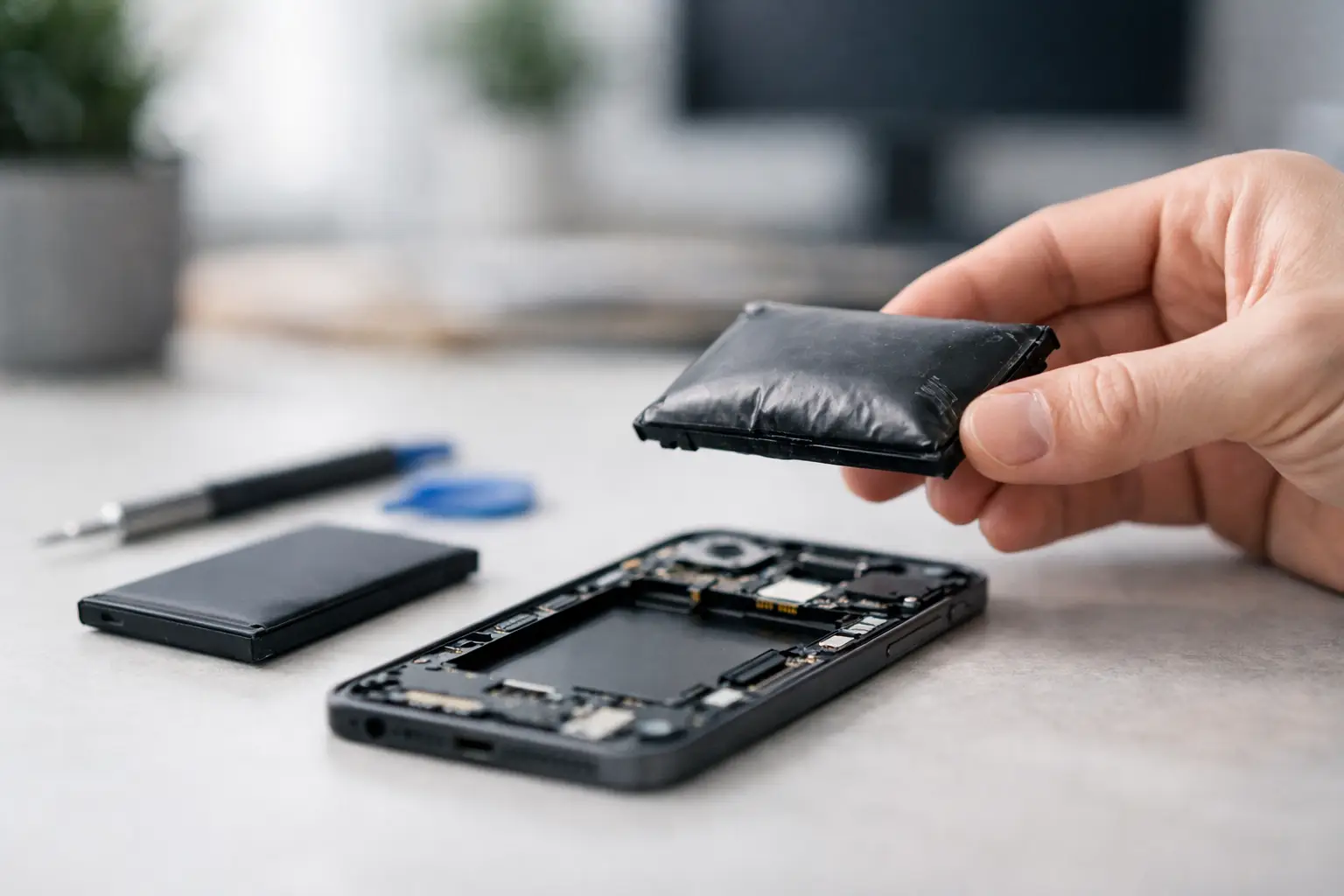
Swelling is the sign you should never ignore. If the screen is lifting, the back cover is separating, or the phone feels physically warped, stop using it and get it checked right away. A swollen battery is a safety issue, not just a performance issue.
Then there is heat. Phones naturally get warm during gaming, video calls, updates, and fast charging. That is normal. What is not normal is a phone getting hot during light use, while idle, or during routine charging every day. Excess heat can mean the battery is under stress or degrading faster than it should.
Battery health matters more than battery percentage
Many people look only at the percentage on screen, but battery percentage is not the same as battery health. A battery can show 100% and still be worn out. What matters is how much capacity it can still hold compared to when it was new.
On iPhones, Battery Health gives a useful clue. Once maximum capacity drops below 80%, most users notice shorter runtime and weaker overall consistency. That does not mean every phone at 79% needs immediate replacement, but it is usually the point where daily frustration starts to outweigh the cost of repair.
On Android devices, battery health is not always shown as clearly, so behavior becomes the best indicator. If the phone needs multiple charges a day, overheats easily, or loses charge quickly even on standby, those are practical signs that the battery is aging.
This is where context matters. A delivery rider, business owner, student, or field worker may need battery replacement sooner because reliability matters more than squeezing a few extra months out of the part. Someone who uses a backup phone lightly might choose to wait. The right timing depends on how much downtime costs you.
How long does a phone battery usually last?
Most smartphone batteries last around two to three years before noticeable decline becomes hard to ignore. Heavy users may feel it sooner. Lighter users may get more time. Charging habits, heat exposure, gaming, fast charging, and even the way the phone is stored all affect lifespan.
That said, age alone is not the best measure. Some two-year-old phones still perform fine, while others need attention much earlier. A battery that has gone through many charge cycles will wear faster than one used more gently. If the phone still holds charge well, does not overheat, and stays stable under normal use, there may be no reason to replace it yet.
When battery replacement makes sense financially
A battery replacement is often the most cost-effective fix for an otherwise good phone. If your device still performs well, the camera is fine, the screen is intact, and storage meets your needs, replacing the battery can give it a solid second life.
This is especially true for premium devices. Many iPhones and flagship Android phones are expensive to replace but still perfectly capable for daily use. In those cases, a new battery is usually far cheaper than buying a new phone.
The trade-off is simple. If your phone has several major problems at once – weak battery, broken screen, charging port damage, motherboard issues, or severe lag from age – it may be worth comparing repair costs against replacement value. But if the battery is the main issue, repair is usually the smarter move.
Signs it may not be only the battery
Not every power problem means you need a new battery. Sometimes the real issue is elsewhere. If the phone does not charge at all, the charging port may be damaged or blocked. If it drains fast after a recent update, software could be the cause. If battery life suddenly collapses after installing a certain app, background activity may be the culprit.
Water damage can also mimic battery failure. So can poor-quality chargers and damaged cables. That is why proper diagnosis matters. Replacing the battery without checking the full power system can waste time and money.
A good technician will look at the charging behavior, heat pattern, battery condition, and port status before recommending repair. That matters even more if you need the job done quickly and want to avoid repeat visits.
Why waiting too long can create bigger problems
A failing battery rarely improves on its own. It usually gets worse in small, inconvenient steps. First the battery drains faster, then it starts overheating, then performance drops, then shutdowns begin. At that stage, the phone becomes difficult to trust for work calls, navigation, mobile payments, two-factor authentication, and basic communication.
If the battery begins swelling, delay becomes risky. Pressure inside the phone can damage the display, frame, or internal components. What could have been a simple battery replacement may turn into a more expensive repair.
There is also the productivity cost. A phone that needs constant charging ties you to cables, power banks, and wall outlets. For busy users, that daily interruption is often more expensive than the repair itself.
Choosing the right battery replacement service
Battery replacement should be quick, but it should not be careless. The quality of the part and the skill of the technician make a real difference. Poor-quality batteries can drain quickly, overheat, or fail early. Improper installation can affect screen sealing, charging performance, or overall device safety.
Look for a repair service that uses genuine or high-quality compatible parts, tests the device before and after repair, and understands the specific brand and model. Speed matters, but trust matters more. If your phone holds work data, family photos, payment apps, and personal accounts, you want trained hands handling it.
Convenience matters too. Many customers put off repairs because they do not want the hassle of traveling, waiting in line, or being without a phone for long. That is exactly why service models that come to your location or offer fast turnaround are so valuable. For customers in Doha, Bayt Al Tech is built around that kind of practical support – quick response, trained technicians, and reliable battery replacement without adding more stress to your day.
So, when should you replace it?
Replace your phone battery when the phone stops serving you reliably. That usually means battery health is low, drain is noticeably worse, shutdowns have started, charging is inconsistent, or swelling and heat are becoming hard to ignore. If the phone is still good in every other way, waiting rarely saves much.
A phone battery is supposed to support your routine, not force you to work around it. If you are carrying a charger everywhere, checking percentage every few minutes, or avoiding important tasks because the phone might die, the timing is already clear. A timely battery replacement can bring back the convenience you paid for in the first place.
The best time to fix a battery issue is before it starts running your day.


